

Short, repeatable resets for spine, hips, and shoulders—designed for real calendars with back-to-back meetings.
“Sit up straight all day” sounds simple but rarely works in practice. Your spine is built to move; holding one rigid position creates its own fatigue. Better approach: rotate between sitting, standing, and brief walking every 45–60 minutes. Dutch hybrid offices often mix hot-desking and home setups—portable habits matter more than perfect furniture.
When sitting, aim for ears over shoulders and shoulders over hips, with a slight lumbar curve supported by your chair or a small cushion. When standing at a desk, keep weight evenly distributed and avoid locking knees. Micro-swaying is normal and healthy.
Change beats correction—your next position is more important than the last one.
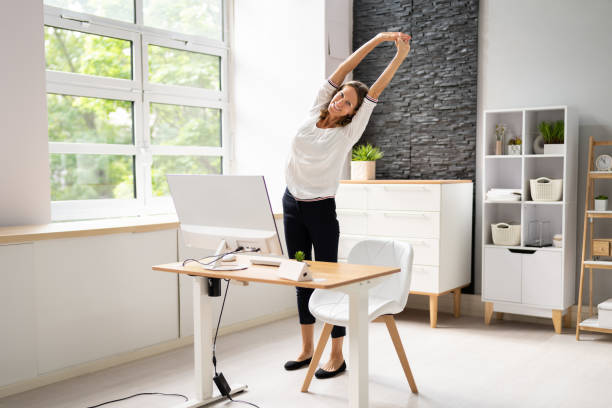
Between tasks, stand beside your chair. Soften knees, breathe out, and let shoulders drop. Shift weight slowly from left foot to right for 30 seconds. Add 10 gentle calf raises and 5 shoulder rolls backward. Sit back down with intention—hips to the back of the chair, feet reset.
This routine interrupts static loading on discs and hip flexors without disrupting colleagues. Stack it onto calendar transitions: when one meeting ends, stand before opening the next link. After a week, note whether afternoon focus scores improve on your personal 0–10 scale.
Combine with stretchesSuggest a shared “stand minute” at the start of internal calls. One person leads a silent shoulder roll; others follow. Normalises movement without lengthy discussions. Works well for remote teams across Netherlands time zones—camera optional.
Standing all day replaces one problem with another—static standing loads calves and lower back. Alternate 20–40 minutes sitting with 10–20 minutes standing if your desk adjusts. Wear comfortable shoes; avoid high heels on standing days.
Place a footrest or small box to shift weight occasionally. Anti-fatigue mats help some people; try one if your employer provides it. Combine standing blocks with screen-distance breaks to reduce eye strain at elevated monitor heights.

Join a posture-focused workshop in Utrecht or online. General education only—confirm details via contact.
| Date | Topic | Format | Price |
|---|---|---|---|
| 26 Jun 2026 | Posture & screen habits | Hybrid | Fee quoted by email |
| 10 Jul 2026 | Remote team movement blocks | Online | Fee quoted by email |
| 24 Jul 2026 | End-of-week reset | In person | Fee quoted by email |